Independent Research · Green Bay, WI
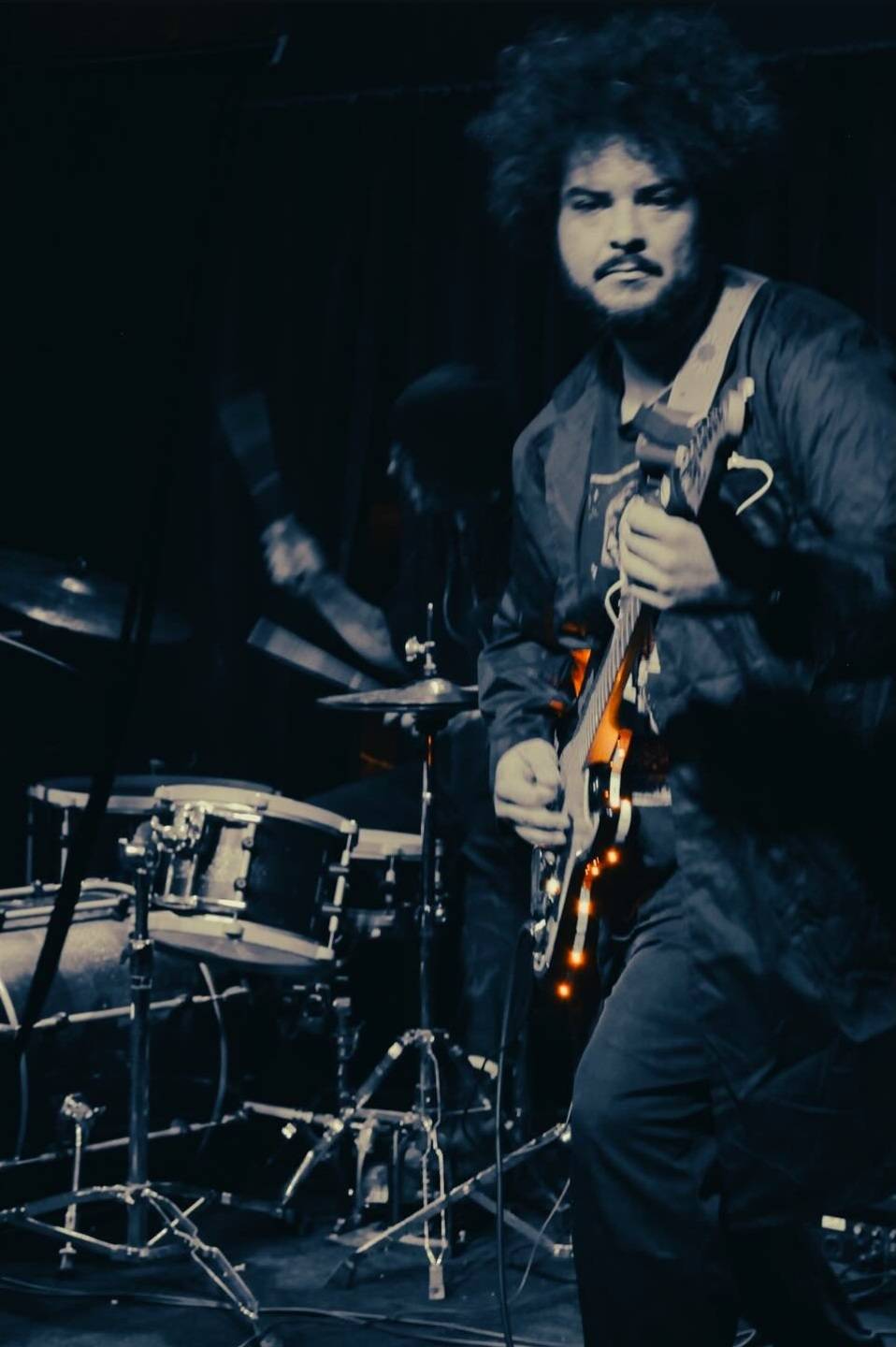
Robert Williams — independent researcher, systems thinker, guitarist.
Building post-quantum cryptography infrastructure on recycled hardware,
because migration shouldn't cost a fortune or wait until 2035.
Origin Story
Robert Williams · Jupiter Labs
I've been taking apart computers — and putting them back together — since I was a teenager. Started on Ubuntu and OpenSUSE around 2006, just because it was free and I was curious. That curiosity never really stopped.
During the 2017 crypto boom, GPUs went scarce and parents couldn't afford gaming PCs for their kids. So I started hitting Craigslist, sourcing parts — a GTX 960 here, an old i5 there — and cobbling together machines that could run Fortnite and Minecraft for $150–$200. Not fancy. Just functional. That was the whole point.
That same philosophy — use what's available, make it work, make it accessible — is exactly what drives CHIRASU today. The security industry says post-quantum migration is expensive and complicated. I say: not if you're creative about where you look.
I majored in astronomy before financial reality hit. I never graduated — but the way I think about systems, from subatomic noise to civilizational infrastructure, that's still very much an astrophysicist's lens. Every scale connects. Nothing is isolated.
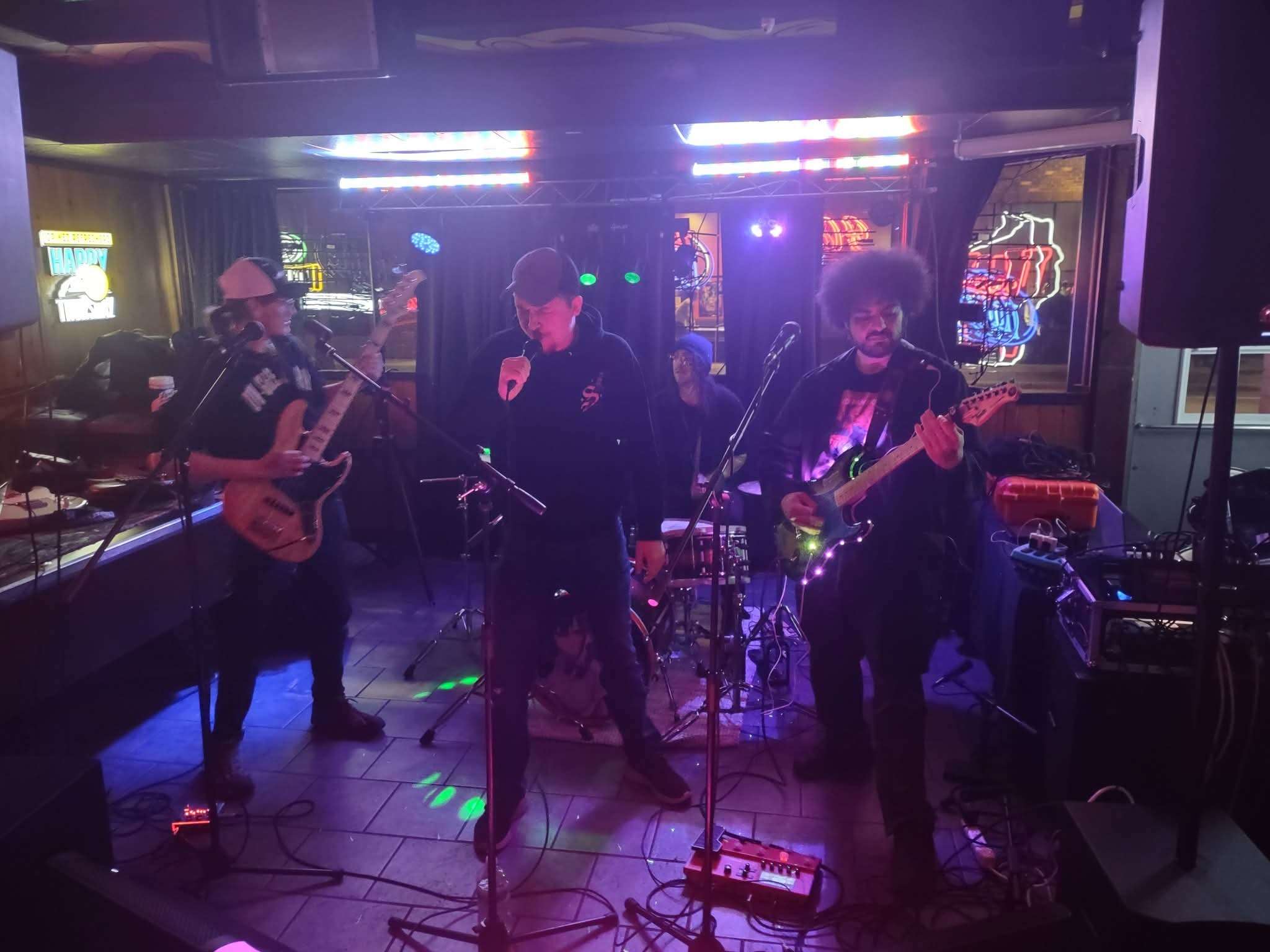
By day I work as a parts coordinator. In the margins, I run a 20-node homelab, write post-quantum firmware in Rust and Go, play guitar in a band, and author a cyberpunk narrative universe that happens to share its philosophical DNA with my actual research. I don't separate these things. They're all the same inquiry.
Ubuntu, then OpenSUSE. I've been living in a terminal ever since. Still my daily driver on research hardware — Fedora and openSUSE depending on the machine.
Budget gaming rigs from salvaged parts — GTX 960s, old i5s, whatever Craigslist had. The goal was always to make something useful for people who couldn't afford the "right" solution. That instinct didn't go anywhere.
Manufacturing experience supporting programs including Artemis I and civilian and military aircraft. Working in environments where process rigor isn't optional teaches you something about what real validation actually looks like.
A 20+ node distributed PQC entropy harvesting system. Field-validated at a live concert on April 25, 2026. IACR preprint in progress.
Micro / Macro
Whether I'm debugging a Rust compile error on a single-board computer or thinking about post-quantum migration at civilizational scale, the same principle applies: zoom out far enough and the pattern repeats. Zoom in far enough and the noise becomes signal.
I keep coming back to the same question: the physical world is already generating randomness constantly — every motor load, every thermal drift, every photon hitting a sensor. That measurement is already happening, for other reasons. So why is "good entropy" something we treat as a service you subscribe to?
Services like Cloudflare's League of Entropy are genuinely useful — but they're also known, named, high-value targets. The moment your randomness source is a company with a URL, you've created a trust boundary an attacker can reason about. Distribute it. Make it physical. Make it local. Make it boring.
Old hardware is "adversarially boring." It's not on anyone's threat model spreadsheet. A 2012 Optiplex running Fedora, measuring grid fluctuation on its power supply, is producing legitimate entropy that no sophisticated attacker is accounting for. That's a feature, not a limitation.
The industry narrative is that post-quantum migration is a decade away. It isn't. NIST has finalized ML-KEM and ML-DSA. The algorithms exist. The barrier is entropy quality and infrastructure inertia — both of which are solvable today, with creative sourcing and open tooling.
True quantum randomness — QRNG — isn't a hardware module you buy. It's reality itself: shot noise in a camera sensor, RF interference, the exact thermal drift in your CPU at 3am. You can't patent that. You can't backdoor it. You can't close source the universe.
The Research
CHIRASU is a distributed post-quantum cryptography entropy harvesting system. The premise: civilization already instruments everything. Factory motor loads, satellite telemetry, IP camera feeds, temperature sensors, grid fluctuation — that measurement is already happening. CHIRASU harvests what's already being recorded, conditions it through NIST SP 800-90B health checks, and generates post-quantum keypairs at the edge.
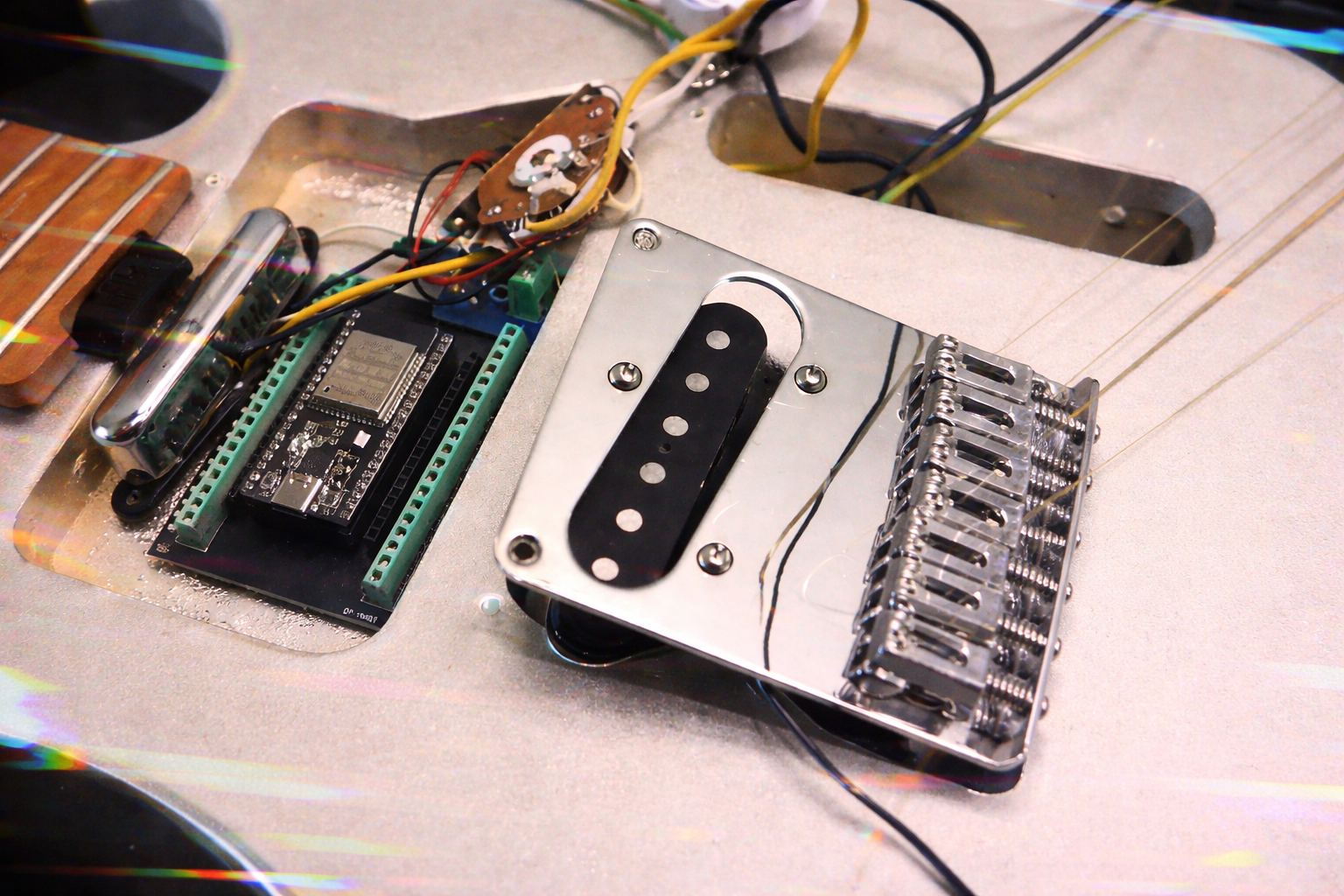
It runs on a 20+ node mesh. Not a data center. Not cloud. A homelab of recycled Optiplexes, single-board computers, and guitar-mounted ESP32s — each one a feather node, passively observing its physical environment. The goal: a shared entropy pool distributed across the mesh. That architecture is actively in development.
GuitaRNG — ESP32 entropy harvester, mid-install
A four-tier decentralized architecture for entropy collection, conditioning, and PQC key generation from ambient physical sources — validated in field deployment at a live music event, April 2026.
Expected submission
July 2026
The constellation isn't just hardware collecting dust. These are active systems, experiments, and services running across the mesh right now. ● active ● experimental
Hash-chained event ledger with a dedicated validator node. BLAKE3 for speed, SHA-256 for heavy-duty archival. Used to audit entropy events across the mesh.
Two active generators producing ML-KEM-1024 and ML-DSA-87 keypairs from conditioned entropy, gated through NIST SP 800-90B health checks.
Full mesh VPN connecting all nodes. No Tailscale cloud dependency. Every device on the constellation reachable by hostname.
Active nodes pulling from piezo sensors, WiFi traffic deltas, Bluetooth, microphone noise, hardware RNG, and ADC pin noise across multiple devices simultaneously.
Local archive and research storage. No cloud dependency for core data. Entropy bundles, keypair records, and field logs stored on-mesh.
Automated vulnerability feed with confidence scoring and dependency auditing across the constellation's software stack.
Nearly all nodes post status, entropy readings, and alerts to a private Discord server via bots and slash commands. Low-overhead, always-on monitoring without a dedicated frontend.
Harvesting entropy from ungrounded guitar pickups — the electromagnetic noise floor of an instrument at rest. Ongoing methodology experiment.
ISP-based adaptive gating on camera sensors to extract photon shot noise as a high-quality entropy source. Part of GuitaRNG Apex development.
Field Validation
Two live deployments. Two different events. One through-line: working PQC entropy systems in uncontrolled, real-world environments. Not simulated. Not benchmarked in Docker. Actually in the room.
In Dialogue
Independent research doesn't mean isolated research. These are some of the practitioners this work has connected with.
Standards Body
Early work reached the team responsible for NIST's entropy source validation standards. That conversation opened a path for post-publication dialogue and helped sharpen the technical framing considerably.
Quantum Security / Industry
A practitioner engaged seriously with the entropy pipeline approach and pushed back hard on trust boundary assumptions and propagation path visibility. That critique is now a load-bearing part of the whitepaper — exactly the kind of conversation independent research needs.
Academic Research / Industry
A formal research interview on practitioner PQC framing, conducted under academic ethics review. A useful calibration — the kind of feedback you can't get from reading papers alone.
The Integrated Practice
These aren't separate hobbies wearing the same name badge. They're one methodology. Systems thinking applied to performance, to narrative, to firmware, to cryptography. The guitar hardware generates entropy. The lore explores themes of observation and control. The research asks whether you can make the physical world do cryptographic work. Same question, different medium.
Let's Talk
I'm always open to collaboration, peer critique, research conversations, or just talking shop about entropy, embedded systems, or Linux distros. This work is more fun when it's a conversation.